This is the part I actually came here to write. Once I understood the gap between assessed and market value, the appeal itself was mostly process — and the process is less scary than the official pages make it sound. Filing is free. You do not need a lawyer. Most people represent themselves, and I did too.
Step 1: Find your real deadline (it's not always July 1)
You file with the King County Board of Equalization by July 1 of the assessment year, or within 60 days of the mailing date printed on your value notice — whichever is later. That mailing date on your own notice is what actually controls, so read it. Miss the window and you're generally waiting until next year.
Step 2: Know what you're allowed to argue
Exactly one thing: your home's market value as of January 1. The Board will not entertain "my taxes are too high", "the rate went up", or "I don't like where the money goes". I know. I tried that speech in my head. Keep everything pointed at the value, because the value is the only lever they can pull.
Step 3: Build your evidence
This is where appeals are won or lost. The strongest evidence, in order:
- Comparable sales. Homes like yours — similar size, age, quality, location — that sold as close to January 1 as possible. Sales after that date count for less and need adjustments. This was the core of my case, and honestly the most tedious part to assemble by hand.
- An appraisal, if you have one dated near January 1. Mine from the purchase was gold.
- Condition evidence. Photos and contractor bids for the stuff the model can't see — deferred maintenance, defects, the roof I keep mentioning.
From your comps you settle on an opinion of value — the number you're asking the Board to accept. I asked for $1,150,000, backed by the appraisal and the comps.
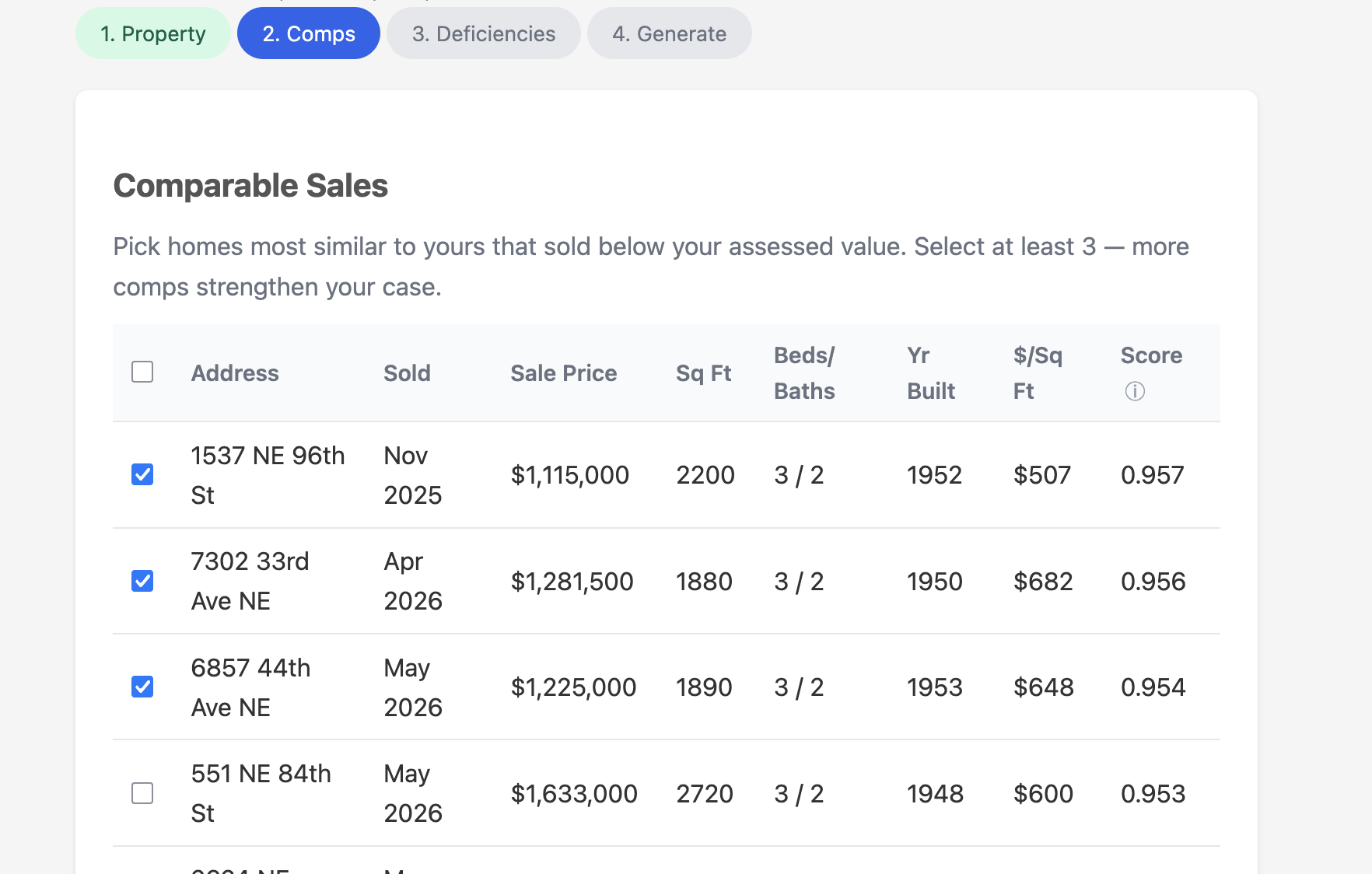
A quick honest aside, since it's my site: pulling and ranking comps by hand is genuinely annoying — it's why I ended up building a tool that does it automatically for any King County address and assembles the whole packet. Filing is free either way; the tool just does the tedious evidence part for $39 instead of an afternoon. Use it or don't — the steps here are the same regardless.
Step 4: File it (online, via eAppeals)
You can file by mail, but do yourself a favor and use King County eAppeals online. No fee. You enter your parcel number, state your opinion of value, and upload your supporting documents. Do not skimp on the documents — they are the appeal. An empty petition with a lower number is just a wish.
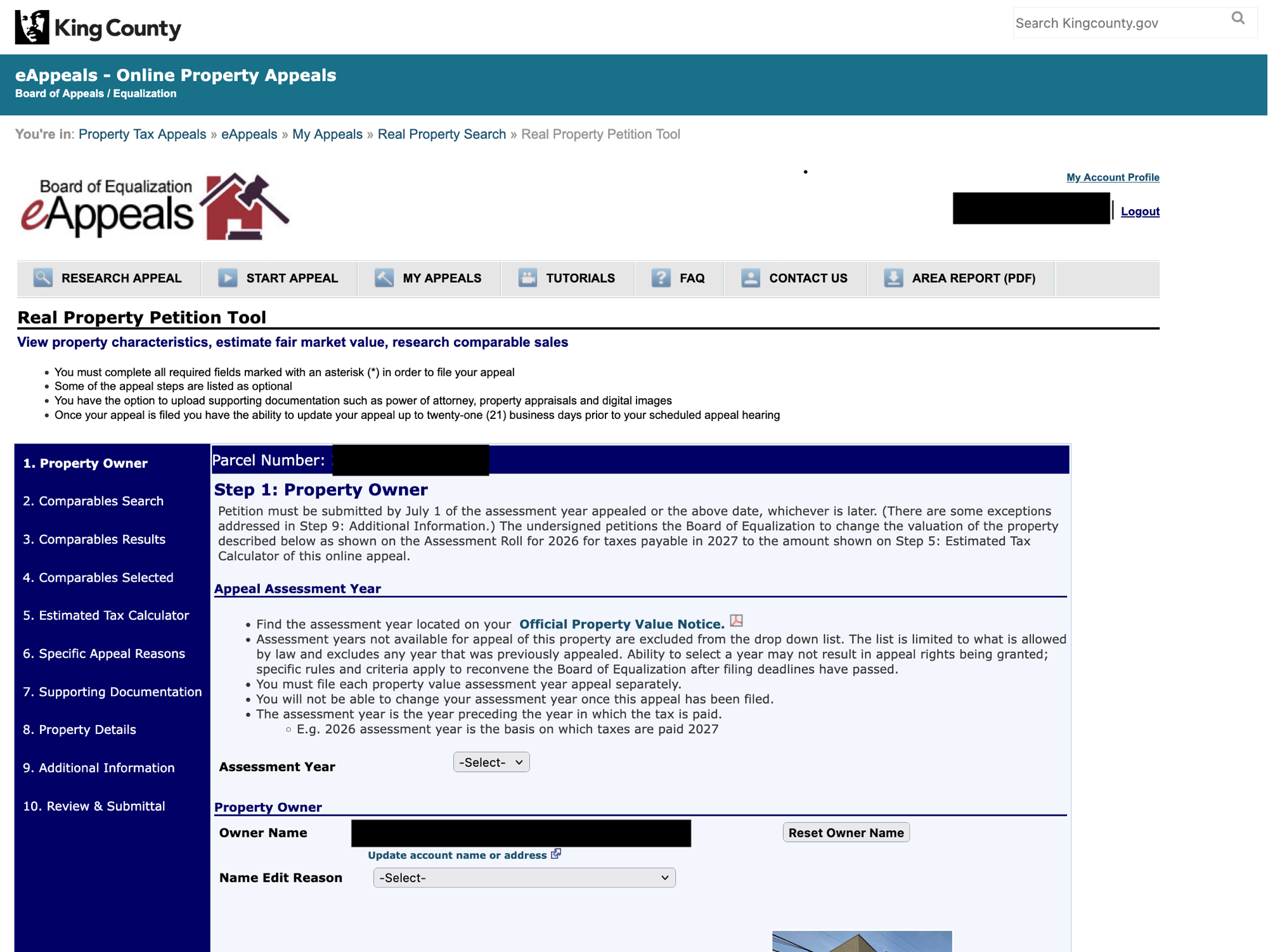
Once you're in, the Real Property Petition Tool walks you through it in ten steps — property owner, comparable sales, your estimated value, appeal reasons, and document upload, then review and submit. One detail worth noting from the fine print: you can keep updating your appeal right up to 21 business days before your hearing.
Step 5: Hand your evidence to both offices, on time
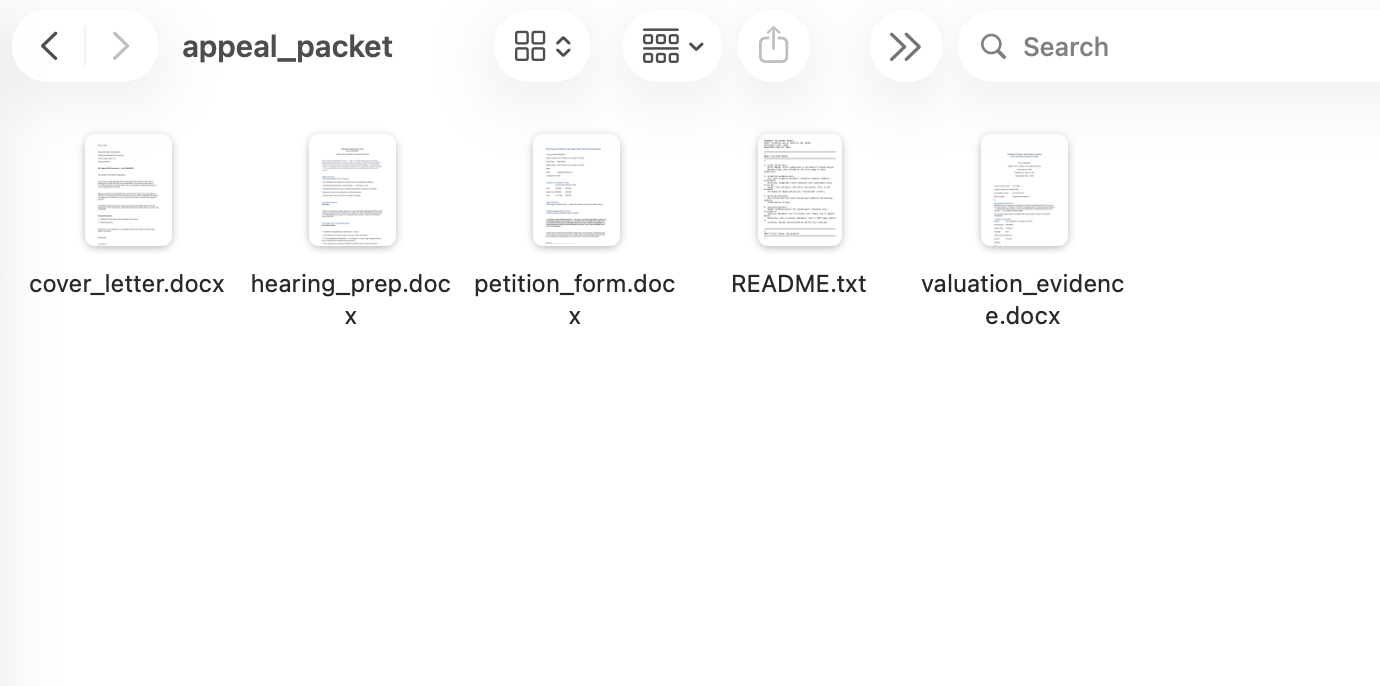
This one has a trap. You must share your evidence with both the Board of Equalization and the Assessor's Office at least 21 business days before your hearing. Business days exclude weekends and county holidays, so count backward carefully. And do not assume one office forwards your packet to the other — send it to both. Label your files and paginate the packet so the Board can actually follow your argument.
Step 6: The Assessor responds — and you might skip the hearing
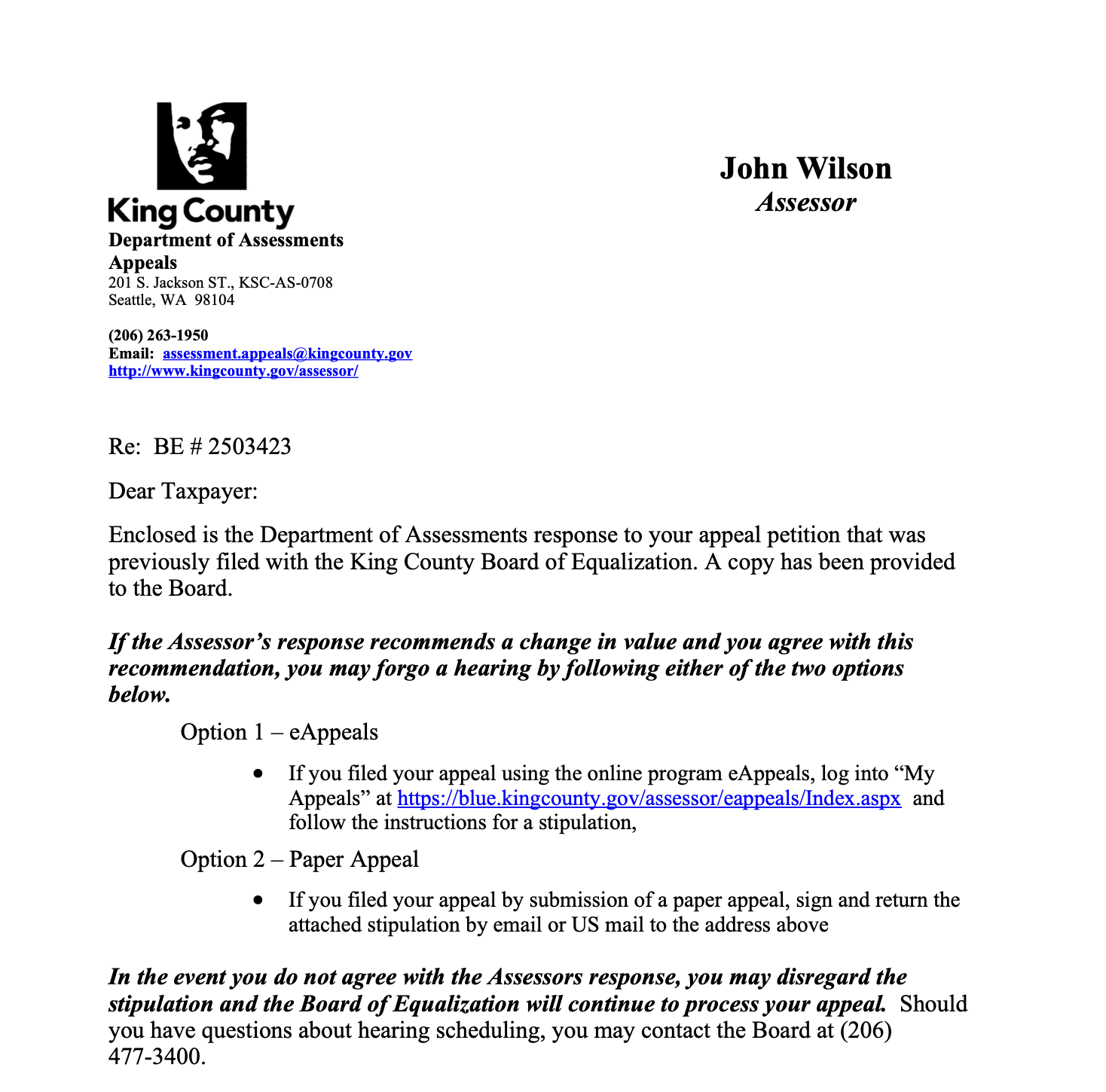
Here's a wrinkle worth knowing, because I didn't. After you file, the Assessor reviews your petition and mails back their own response, with a copy to the Board. If they recommend a change in value and you're happy with it, you can accept it with a stipulation and skip the hearing entirely — either through eAppeals or by signing and returning the enclosed form. If you don't agree, you ignore the stipulation and the Board proceeds to your hearing as normal. Either way, you lose nothing by having filed.
This is how mine ended. I'd asked for $1,150,000; the Assessor offered about $1.3 million, down from $1,373,000. I took it — roughly $700 a year back. Next time, with solid comps, I'd go to the hearing instead. (The full story.)
Step 7: The hearing
It's informal and short — you can attend in person or by phone. You present your comps and condition evidence, the Assessor may respond, and Board members ask questions. Stay disciplined: market value as of January 1, every time.
Step 8: The decision (and what's after)
The Board issues a written decision, generally within about 45 days. If your value drops, your bill drops with it — and it resets your baseline going forward, which is the part people forget. If you disagree with the result, you can escalate to the Washington State Board of Tax Appeals.
Appealing is the big lever, but it's not the only one. Here are the other ways to manage the burden.